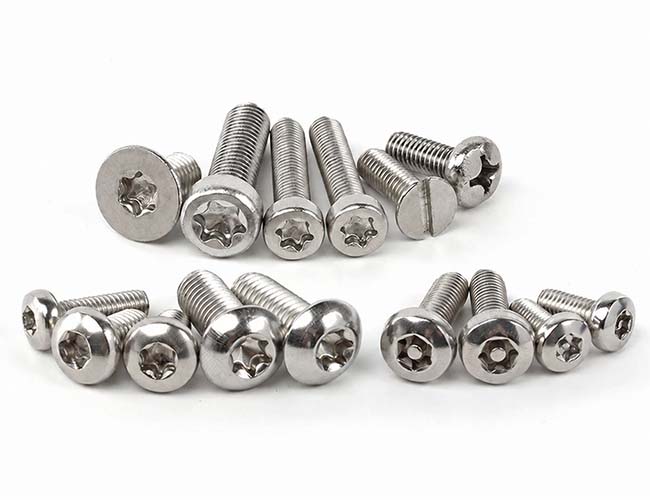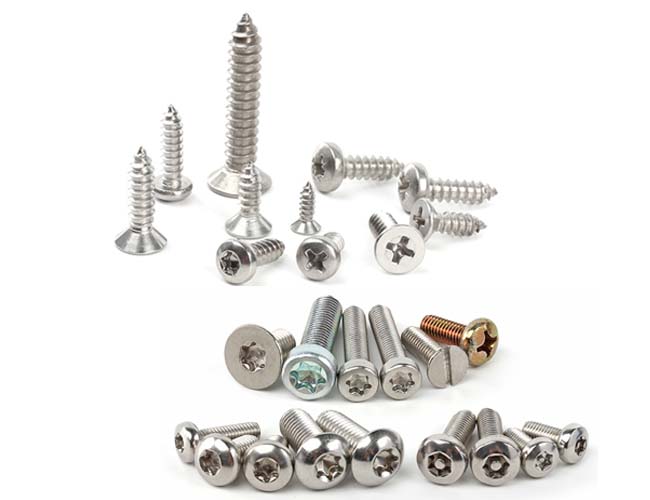
Screw head types are an important part of fastener selection because the head design affects installation method, appearance, load distribution, tool access, and final assembly performance. For industrial buyers, engineers, equipment manufacturers, and distributors, understanding common screw heads and their applications helps improve sourcing accuracy and reduce assembly problems.
Common Screw Head Types and Where They Are Used
Why Screw Head Types Matter in Fastener Selection
The screw head is not only the visible top of the fastener. It determines how the screw is driven, how it sits on or inside the material, and how much bearing surface it provides. A wrong head style may cause poor appearance, weak clamping, difficult installation, or interference with nearby parts.
When choosing screws for industrial use, buyers should consider the mating material, installation space, required appearance, tightening tool, vibration conditions, and whether the screw must sit flush with the surface. The correct head type should also match the screw material, thread design, size, standard, and coating requirement.
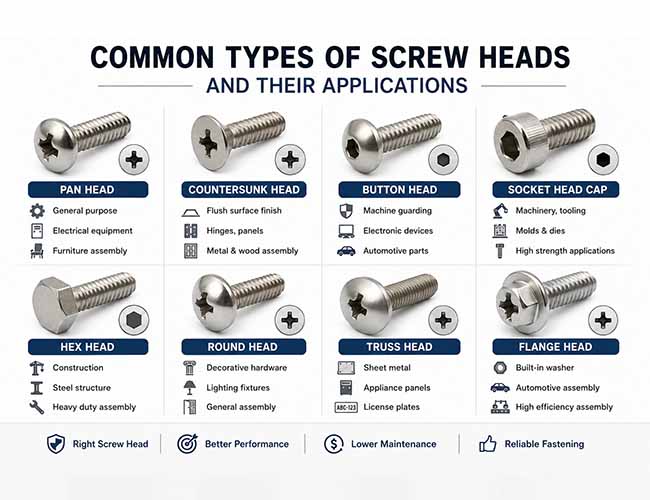
Pan Head Screws
Pan head screws have a slightly rounded top and a flat bearing surface underneath the head. They are one of the most common screw head types for general assembly because they provide a neat appearance and stable contact with the workpiece.
These screws are widely used in sheet metal parts, electrical equipment, machinery covers, control panels, furniture hardware, brackets, and plastic components. Pan head screws are available with different drive styles, including Phillips, slotted, hex socket, and Torx-style drives. Stainless steel pan head screws are often selected for applications requiring corrosion resistance and clean appearance.
Countersunk Head Screws
Countersunk head screws are designed to sit flush with or below the surface after installation. The conical underside of the head fits into a countersunk hole, creating a smooth surface without protrusion.
This head type is commonly used in metal panels, hinges, furniture, machinery parts, architectural hardware, and products where a flat finished surface is required. Countersunk screws are useful when protruding screw heads may interfere with movement, assembly clearance, or product appearance.
When using countersunk screws, the angle of the head and the countersink in the material should match. Buyers should confirm whether the project requires standard countersunk, flat head, or oval countersunk screws according to the drawing or product standard.
Button Head Screws
Button head screws have a low-profile rounded head with a smooth appearance. They are often used where moderate bearing surface and attractive design are both needed. Compared with some taller head styles, button head screws can reduce protrusion while still providing good tool engagement.
Common applications include machinery guards, equipment covers, automotive components, electronic housings, furniture, and visible industrial assemblies. Button head socket screws are especially popular in applications where hex socket driving is preferred for better installation control.
Socket Head Cap Screws
Socket head cap screws have a cylindrical head and an internal hex socket drive. They are commonly used in machinery, tooling, molds, automation equipment, and assemblies that require strong clamping force and precise installation.
The socket drive allows installation in spaces where external wrench access may be limited. Socket head cap screws are often made from alloy steel for high-strength applications, but stainless steel versions are also used when corrosion resistance is required. Buyers should review strength grade, material, coating, and standard before selecting this screw type for load-bearing assemblies.
Hex Head Screws
Hex head screws have a six-sided external head that can be tightened with a wrench or socket tool. They are suitable for heavy-duty fastening where higher torque and strong tool engagement are needed.
Hex head screws are commonly used in construction, machinery, equipment frames, brackets, structural fittings, agricultural equipment, and maintenance applications. They are available in carbon steel, stainless steel, alloy steel, and other materials. For outdoor or corrosive environments, stainless steel or properly coated hex head screws may be preferred.
Round Head Screws
Round head screws have a domed top and a relatively traditional appearance. They are often used where a visible rounded head is acceptable or preferred. Their head shape provides a finished look while maintaining practical fastening performance.
Typical uses include furniture, light equipment, decorative hardware, electrical components, and general assemblies. Although round head screws are not always the first choice for modern industrial designs, they remain useful in many standard and custom fastening applications.
Truss Head Screws
Truss head screws have a wide, low-profile head that provides a larger bearing surface. This makes them useful when fastening thin materials or when the load should be spread over a wider area.
They are often used in sheet metal, plastic parts, license plates, appliance panels, electrical enclosures, and light-duty assemblies. Because of the large head diameter, truss head screws can help reduce pull-through risk in suitable applications. They are also commonly used when a low-profile appearance is desired.
Flange Head Screws
Flange head screws include an integrated washer-like surface under the head. This design can distribute load, reduce the need for a separate washer, and improve assembly efficiency.
Flange head screws are used in automotive parts, machinery, metal brackets, equipment housings, and production assembly lines. Some flange head screws include serrations under the head to improve resistance to loosening, but the choice depends on the mating material and whether surface marking is acceptable.
How to Choose the Right Screw Head Type
To select the correct screw head, first consider whether the head should sit above the surface, flush with the surface, or provide a wide bearing area. For a clean flush finish, countersunk screws are often suitable. For general assembly, pan head screws are commonly used. For high-strength machinery applications, socket head cap screws or hex head screws may be more appropriate.
Next, confirm the drive style. Phillips and slotted drives are common for general use, while hex socket and Torx-style drives can provide better tool engagement for controlled assembly. The drive style should match the installation tool, production method, and required tightening performance.
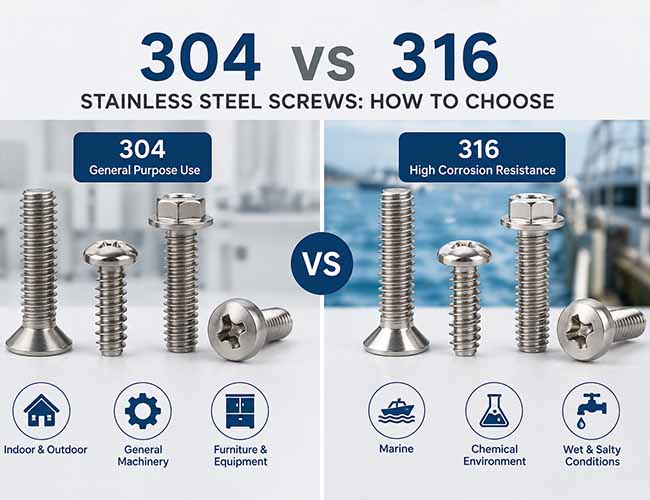
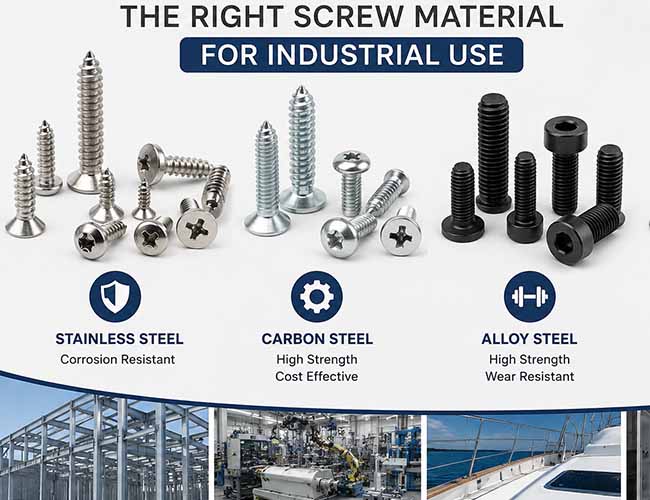
Buyers should also confirm material and finish. Stainless steel screws are often selected for corrosion resistance, while carbon steel or alloy steel screws may be chosen for strength or cost efficiency. Coatings such as zinc plating, black oxide, nickel plating, or other finishes can improve appearance and protection depending on the environment.
Custom Screw Head Solutions for Industrial Buyers
Some projects require special head dimensions, custom drive designs, combined washer heads, non-standard lengths, special threads, or application-specific materials. In these cases, drawings, samples, or detailed specifications help ensure accurate production and sourcing.
Flybear Screw supports buyers with common screw head types, stainless steel screws, carbon steel screws, alloy steel screws, self-tapping screws, machine screws, and custom screw solutions for industrial, construction, electronics, furniture, and equipment applications.
In summary, common screw head types include pan head, countersunk head, button head, socket head cap, hex head, round head, truss head, and flange head screws. Each head type has specific advantages for appearance, installation access, bearing surface, torque control, and application requirements. By matching the screw head to the material, environment, assembly method, and performance needs, buyers can achieve safer and more reliable fastening results.