304 vs 316 stainless steel screws is a common comparison for buyers who need corrosion-resistant fasteners for construction, machinery, marine, equipment, and general industrial assembly. Both grades are widely used, but they are not designed for exactly the same working environments. Choosing the right material can help reduce corrosion risk, control purchasing cost, and improve long-term fastening reliability.
How to Choose Between 304 and 316 Stainless Steel Screws
304 vs 316 Stainless Steel Screws: Main Difference
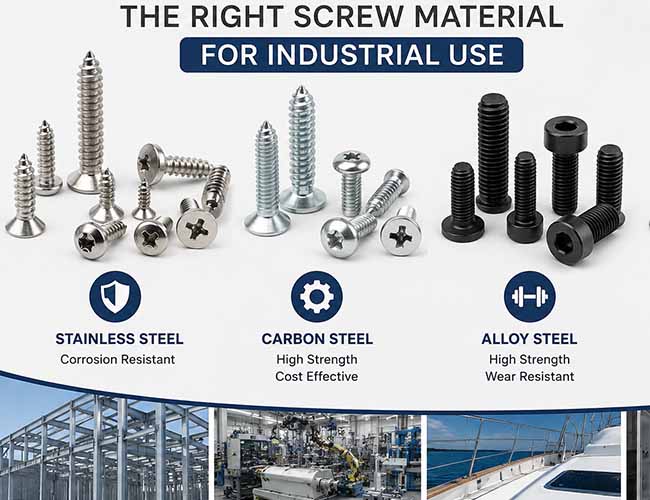
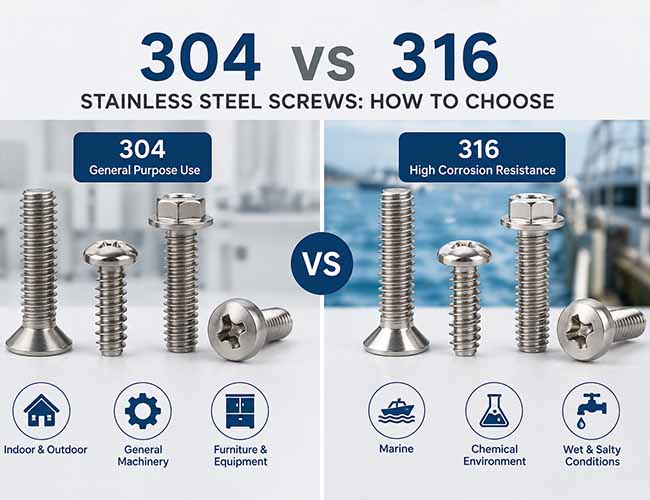
The main difference between 304 and 316 stainless steel screws is their corrosion resistance in more aggressive environments. 304 stainless steel is a general-purpose austenitic stainless steel that performs well in many indoor, outdoor, and mildly corrosive applications. It is commonly selected for equipment assembly, building hardware, furniture, sheet metal parts, and general industrial use.
316 stainless steel contains molybdenum, which improves resistance to corrosion in chloride-rich environments. This makes 316 stainless steel screws a stronger choice for marine, coastal, chemical, food processing, and washdown applications. For buyers, the decision is usually not about which grade is “better” overall, but which grade is better matched to the application environment.
When to Use 304 Stainless Steel Screws
304 stainless steel screws are suitable for many standard fastening applications where good corrosion resistance and a clean surface appearance are required. They are often used in indoor machinery, electrical cabinets, furniture, light construction, commercial equipment, brackets, panels, and general hardware.
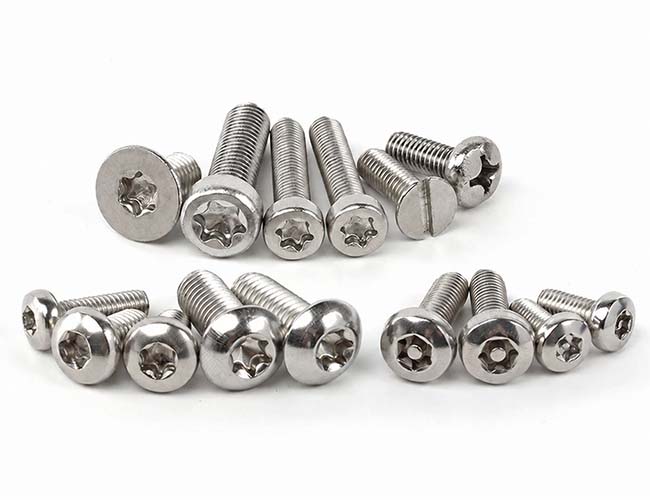
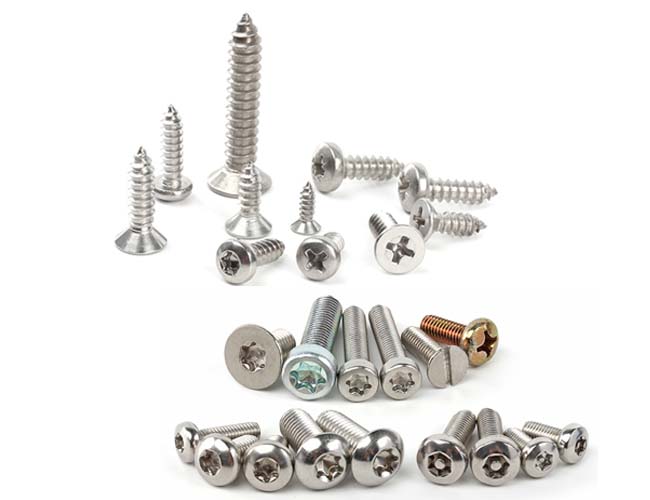
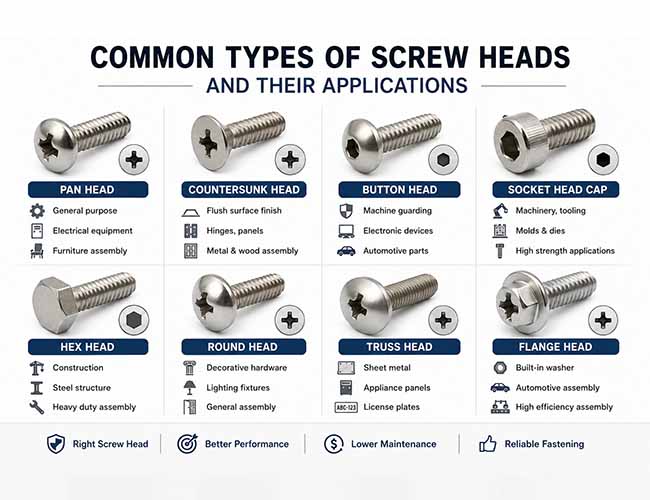
For projects that are not exposed to saltwater, strong chemicals, or continuous high humidity, 304 stainless steel screws can provide a practical balance of performance and cost. They are also widely available in many head styles, drive types, thread forms, and standards, including machine screws, self-tapping screws, socket screws, countersunk screws, pan head screws, and hex head screws.
Buyers often choose 304 stainless steel when the working environment is controlled or moderately corrosive. For example, indoor equipment, architectural fittings, appliance parts, and general assemblies can often use 304 stainless steel screws effectively when the correct size, thread, and installation method are selected.
When to Use 316 Stainless Steel Screws
316 stainless steel screws are recommended when the fastener will be exposed to salt spray, seawater, coastal air, chemical cleaning, or other corrosive conditions. Common applications include docks, boats, railings near the sea, outdoor lighting, chemical equipment, food processing machinery, beverage equipment, and wastewater-related facilities.
In marine and coastal projects, chloride exposure can accelerate corrosion on unsuitable materials. 316 stainless steel offers improved resistance in these conditions, making it a preferred option when long-term corrosion protection is more important than the lowest initial cost.
For food processing and hygienic equipment, 316 stainless steel screws may also be selected because cleaning chemicals, moisture, and frequent washdown cycles can create a demanding environment. The correct screw design can also help improve cleanability, especially when smooth head styles or flush installation are required.
Cost Considerations for 304 and 316 Stainless Steel Screws
In most purchasing situations, 316 stainless steel screws cost more than 304 stainless steel screws because of the alloy composition and material demand. However, choosing 304 only to reduce cost may not be economical if the application environment causes early corrosion, replacement work, downtime, or product failure.
A good sourcing decision should compare the total cost of use, not only the unit price. For standard indoor use, 304 stainless steel is often sufficient. For coastal, marine, chemical, or washdown environments, 316 stainless steel may help reduce maintenance and replacement risks.
Strength and Mechanical Performance
Both 304 and 316 stainless steel screws are commonly used where corrosion resistance is the priority. However, buyers should not choose fasteners by material grade alone. Mechanical requirements such as tensile strength, thread engagement, tightening method, vibration, load direction, and mating material should also be reviewed.
For load-bearing assemblies, it is important to confirm the screw standard, size, thread pitch, head type, and installation conditions. Stainless steel screws are available in many specifications, but the right choice depends on the full fastening design. If the application requires special strength performance, drawings and technical requirements should be confirmed before production or bulk purchase.
Surface Finish and Appearance
Stainless steel screws are often selected for visible applications because they provide a clean metallic appearance. Common finishes may include plain stainless steel, polished surfaces, passivated surfaces, or other project-specific treatments. The finish can affect appearance, cleanliness, and corrosion performance, especially in exposed environments.
For architectural hardware, furniture, and decorative assemblies, surface consistency is important. For industrial equipment, corrosion resistance and dimensional accuracy may be more important than appearance. Buyers should clearly define the finish requirement when requesting quotations to avoid misunderstanding during production or sourcing.
How Buyers Should Make the Final Choice
When choosing between 304 and 316 stainless steel screws, start by reviewing the service environment. If the screws will be used indoors, in dry conditions, or in general outdoor applications without heavy salt or chemical exposure, 304 stainless steel is often a suitable option. If the screws will be exposed to saltwater, coastal air, chemicals, cleaning agents, or frequent moisture, 316 stainless steel is usually the safer choice.
Next, confirm the product details, including diameter, length, thread type, head style, drive type, standard, tolerance, and packaging requirements. For OEM production, distributors, and industrial procurement, clear technical information helps avoid wrong material selection and supports more accurate pricing.
Flybear Screw supplies stainless steel screws for standard and custom fastening applications, supporting buyers who need suitable fastener solutions for industrial, construction, machinery, marine, and commercial projects.
In summary, 304 stainless steel screws are a practical choice for general corrosion-resistant fastening, while 316 stainless steel screws are better suited for harsher environments involving salt, chemicals, or frequent moisture. The best choice depends on the application environment, required standard, mechanical performance, appearance, and long-term maintenance expectations.