Stainless steel screws are used for fastening applications where corrosion resistance, clean appearance, and reliable long-term performance are important. They are widely selected by engineers, contractors, equipment manufacturers, and distributors because stainless steel can perform well in demanding environments without requiring the same level of surface protection as many carbon steel fasteners.
Common Uses of Stainless Steel Screws in Industrial and Commercial Applications
Why Stainless Steel Screws Are Used in Corrosive Environments
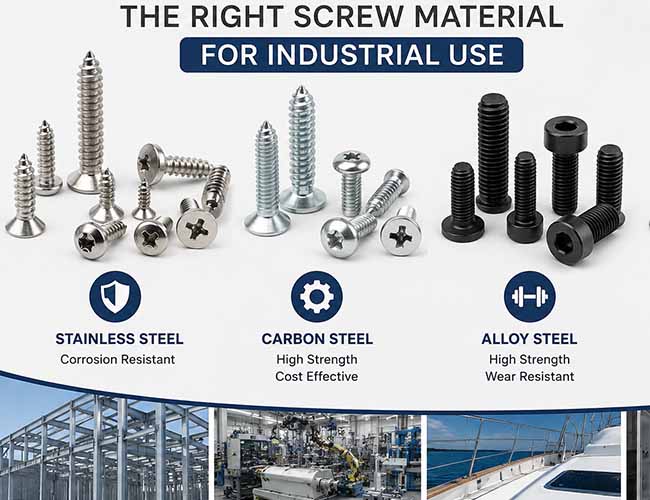
One of the main reasons buyers choose stainless steel screws is their resistance to rust and corrosion. Stainless steel contains chromium, which helps form a protective surface layer. This makes the screws suitable for humid areas, outdoor installations, washdown zones, and environments where regular exposure to moisture may occur.
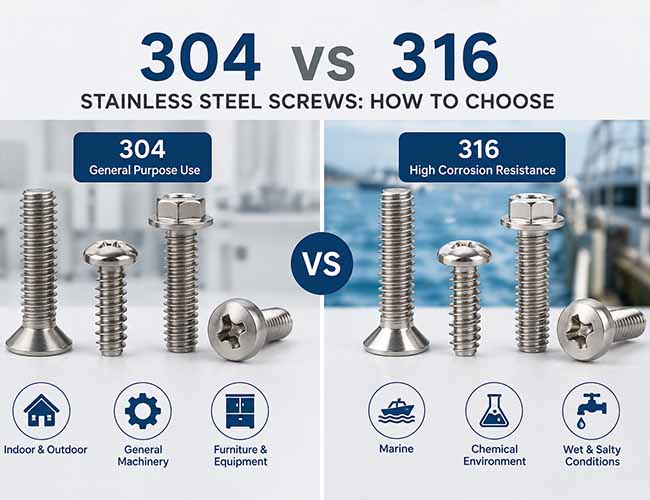
For general corrosion resistance, 304 stainless steel screws are commonly used in construction, furniture, machinery, and general equipment assembly. For harsher environments, especially marine, chemical, or coastal applications, 316 stainless steel screws are often preferred because they offer stronger resistance to chloride-related corrosion.
Construction and Building Applications
Stainless steel screws are frequently used in building and construction projects where durability and appearance both matter. They can be found in roofing systems, wall panels, handrails, brackets, door hardware, facade systems, and outdoor structural fittings. Because they resist staining and surface deterioration, they are suitable for visible installations where a clean finish is required.
In exterior construction, stainless steel fasteners help reduce the risk of rust marks around joints and panels. This is especially important for projects exposed to rain, changing temperatures, or air pollution. Builders and contractors often choose stainless steel screws for long-service assemblies that are difficult to replace after installation.
Machinery and Equipment Assembly
Stainless steel screws are also used in machinery, automation equipment, pumps, valves, conveyors, and industrial enclosures. These applications often require fasteners that can handle vibration, repeated maintenance, and exposure to oils, cleaning agents, or moisture.
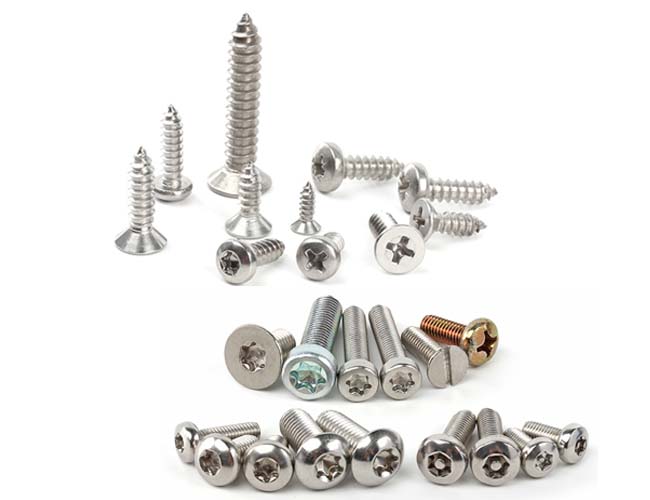
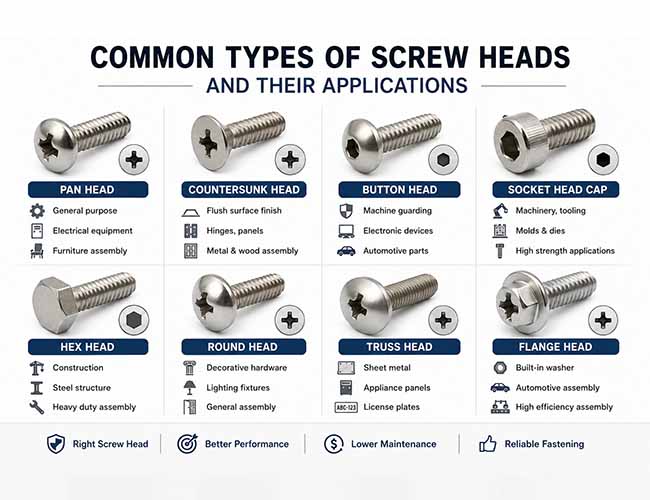
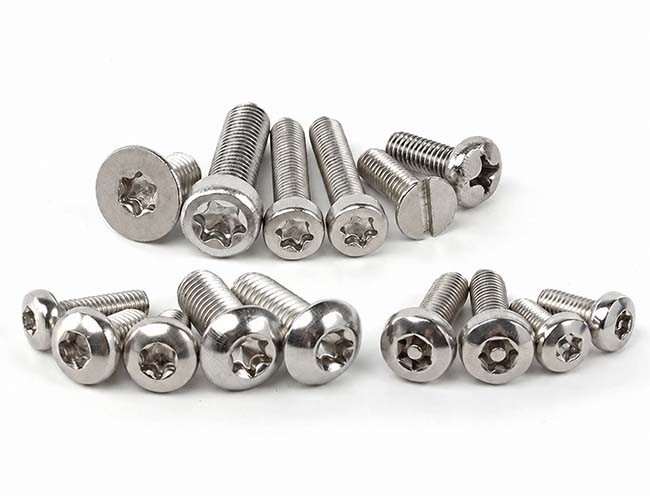
Machine screws, socket head cap screws, pan head screws, countersunk screws, and self-tapping screws made from stainless steel are commonly used in equipment manufacturing. The correct head type, drive type, thread form, and length should be selected according to the assembly structure and load requirements.
Marine and Coastal Applications
Marine environments are challenging for fasteners because saltwater and salty air can accelerate corrosion. Stainless steel screws, especially 316 grade, are often used in docks, boats, railings, outdoor lighting, marine hardware, and coastal construction. While no fastener material is completely immune to corrosion in every condition, stainless steel provides a practical balance of strength, appearance, and corrosion resistance for many marine-related applications.
When sourcing screws for coastal or marine use, buyers should consider the grade, thread design, surface finish, and compatibility with the base material. Proper installation also matters, because trapped moisture, poor drainage, and contact with dissimilar metals can affect fastener performance.
Food Processing and Hygienic Equipment
Stainless steel screws are widely used in food processing equipment, kitchen equipment, beverage machinery, and sanitary production environments. The smooth surface and corrosion-resistant properties make stainless steel suitable for areas that require frequent cleaning.
In these applications, fastener selection should consider not only corrosion resistance but also cleanability, head style, and installation position. Screws with smooth heads or flush installation designs may be preferred where dirt accumulation should be minimized.
Electronics, Furniture, and Decorative Products
Beyond heavy industry, stainless steel screws are also used in electronics, appliances, furniture, displays, and decorative hardware. Their bright metallic appearance makes them useful for visible assemblies where aesthetics are important. Stainless steel screws can also provide stable fastening in products exposed to indoor humidity or occasional outdoor use.
For furniture and consumer goods, common options include countersunk screws, round head screws, self-tapping screws, and small machine screws. The selection depends on the material being fastened, such as wood, sheet metal, plastic, or aluminum.
How to Choose the Right Stainless Steel Screw
Choosing the correct stainless steel screw requires more than selecting the material. Buyers should confirm the required standard, diameter, thread pitch, length, head type, drive style, and finish. Common standards may include DIN, ISO, ANSI, ASTM, or other project-specific requirements, depending on the market and application.
The application environment is also important. For indoor general use, 304 stainless steel is often suitable. For saltwater, chemical exposure, or coastal environments, 316 stainless steel may be a better choice. If the screw must carry mechanical load, the buyer should also review strength requirements and ensure that the selected fastener matches the design conditions.
Custom Stainless Steel Screws for Special Projects
Some projects require non-standard screws, special dimensions, unusual head designs, custom threads, or specific surface treatments. In these cases, working with a supplier that understands both standard fasteners and custom production can help reduce procurement risks.
Flybear Screw supports buyers looking for stainless steel screws for industrial, construction, machinery, and commercial fastening applications. For sourcing managers and distributors, clear drawings, samples, standards, material requirements, and application details can help ensure accurate quotation and production planning.
In summary, stainless steel screws are used in a wide range of applications because they combine corrosion resistance, strength, clean appearance, and long service potential. From construction and marine hardware to machinery, food equipment, furniture, and electronics, they remain one of the most practical fastener choices for demanding environments. Selecting the right grade, size, standard, and design is the key to achieving reliable fastening performance.